The Myth of the Perfect Gear for Every Hill
The perfect bicycle gear for every hill does not exist. Learn how cadence, slope, fatigue, and shifting shape a comfortable, sustainable climb.
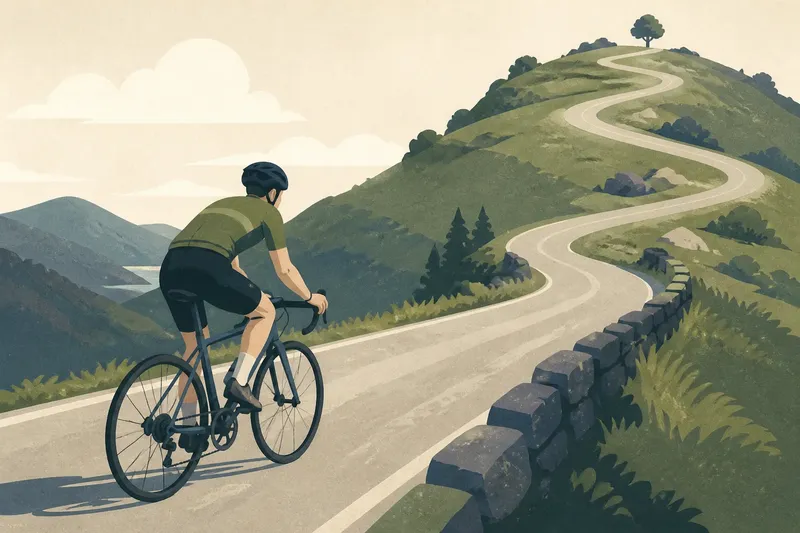
The most common mistake on a hill is searching for one perfect gear before you start climbing. That hunt can leave you grinding slowly, spinning frantically, or blaming your bicycle for a choice that simply does not fit the slope and your legs at that moment. The perfect bicycle gear for every hill is a myth; a comfortable, sustainable cadence is a better guide.
Gears change how much effort each pedal stroke asks of you and how far the bicycle moves with that stroke. A lower gear makes pedaling easier but advances the bicycle less per turn. A higher gear asks for more force and carries it farther. Neither setting is inherently right. The useful choice depends on how steep the road is, how quickly you want to climb, and what effort you can maintain.
What a gear changes
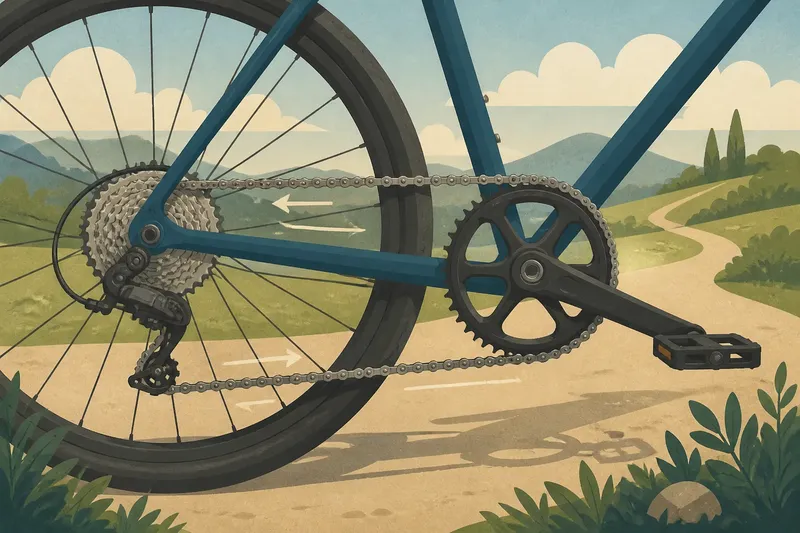
Think of a gear as a way to trade pedal force for distance. On a typical derailleur bicycle, shifting to an easier gear lets the cranks turn with less resistance, though you must turn them more often to keep moving at the same pace. A harder gear gives more distance per crank turn, but each turn demands more force.
The gear itself does not make a hill shorter or remove the work of gaining height. It changes the shape of that work. A very hard gear can make each pedal stroke feel like a push against a wall; an unusually easy gear can make your legs turn quickly while the bicycle crawls. Between those extremes is a range that feels manageable for you on that particular climb.
That range can shift within a single ride. A smooth, gradual rise may suit a harder setting than a steep ramp. A rough road, a loaded rack, or a strong headwind can make an otherwise familiar climb feel more demanding. Your body matters, too: the gear that feels comfortable after a rest may not feel the same after a long ride.
Cadence over a magic setting
Cadence is the rate at which you turn the pedals. You do not need a sensor or a target number to notice its broad signals. If each pedal stroke feels like a heavy shove and your legs slow down, try an easier gear. If your feet are whirling with little sense of control, a slightly harder setting may feel steadier, provided it does not make you strain.
There is no single cadence that suits every rider. Leg length, strength, fitness, bicycle setup, terrain, and personal comfort all influence what feels sustainable. A rider who prefers a relaxed, quicker turn may choose differently from someone who naturally pedals more slowly. The useful question is not, “What number should I hold?” but, “Can I keep this effort smooth without tightening up?”
Pay attention to more than your legs. If you are holding your breath, clenching the handlebars, or rocking your upper body to force the pedals around, the gear may be too hard for the effort you are trying to sustain. If the pedals spin without helping you feel composed, adjust the other way. These are cues, not a performance test; comfort can vary across a ride.
How hills change the choice
A climb is rarely one uniform slope. The road may steepen near a driveway, ease around a bend, or rise sharply after a flatter approach. Your gear can change with it. There is no prize for staying in one setting from bottom to top, and changing gears to match the road is ordinary riding.
On a gradual incline, you might stay in your current gear until the pedal pressure begins to build, then shift to an easier one. On a sharp rise, shifting before the steepest section can help you avoid trying to force a hard gear while your speed has already fallen. If you reach a steeper patch unexpectedly, ease your pedal pressure as you shift rather than bearing down hard on the pedals through the change. Follow the bicycle maker’s guidance for shifting and equipment care; designs differ.
On a long climb, the best setting can change as fatigue arrives. A gear that felt comfortable near the bottom may begin to demand more effort later. Choosing an easier one is not a failure or an admission that your gearing is wrong. It can be a sensible way to keep your pedaling controlled and continue at a pace you can manage.
Why universal advice fails
Advice such as “climb in the easiest gear” sounds simple, but it ignores what the rider is trying to do. Someone easing up a steep lane may welcome a very low gear. Someone riding a gentle rise may prefer a firmer pedal feel. A gear that gives one person comfortable control may feel awkward to another.
The bicycle’s gearing range also matters. A city bike, a road bike, and a touring bicycle may offer different combinations, even if their riders face the same hill. Tire choice, carrying a child or panniers, and the surface under the wheels can affect how the climb feels. If you repeatedly run out of easy gears on the routes you ride, a bicycle shop can help assess whether the gearing suits your use; a single uncomfortable climb does not, by itself, settle that question.
Speed is another source of confusion. A rider in a harder gear may move faster for a stretch, but that does not make the setting more efficient for every person or slope. A very easy gear may feel slow while letting the rider keep effort even. Pick a rhythm you can sustain rather than treating one gear as the answer to every hill.
Choosing a climbing rhythm?
Should I use the easiest gear on every hill?
No. Use an easier gear when the resistance feels too high, but the lowest setting may feel unnecessarily spinny on a mild incline. Aim for controlled pedaling, not the smallest gear available.
Is a slow cadence bad?
Not automatically; riders have different comfortable rhythms. If a slow turn means each stroke feels like a hard grind or makes you brace your shoulders, try easing the gear and see whether your effort smooths out.
Should I shift before a hill?
If you can see a steep section ahead, shifting to an easier gear before the pedals become heavily loaded can make the change feel more manageable. On a rolling road, adjust as the slope changes rather than waiting until you are straining.
What if my bike still feels too hard?
First consider whether the route, load, fatigue, or pace is making the climb harder than usual. If the same kind of slope consistently leaves you without a comfortable option, ask a qualified bicycle mechanic to inspect the bike and discuss gearing choices.
A useful practice climb
Say you ride a familiar paved hill and usually attack it in one gear because you want to get to the top quickly. On your next ride, imagine choosing an easier gear as the slope begins to rise, then adjusting again if the road steepens. The expected observable result is not a faster time; it is a smoother pedal stroke and less urge to brace against the handlebars. If that does not happen, you can try a different setting on a later ride.
Keep the comparison modest. Notice whether you can breathe comfortably, whether your legs feel controlled, and whether the bicycle responds without a hard shove at each turn. You might find that you prefer one rhythm on a short ramp and another on a longer ascent. That is useful information about your own riding, not a universal rule.
Comfort is the useful measure
When a hill feels difficult, it is tempting to search for the one gear that should solve it. Instead, make small shifts and listen to the effort: heavy pedal pressure suggests trying easier, while uncontrolled spinning may call for a firmer setting. A relaxed grip and steady breathing can help you notice the difference without turning the climb into a contest.
The perfect bicycle gear for every hill is not a fixed setting waiting to be discovered. It is a choice that changes with the road, the bicycle, and the rider’s energy. On your next climb, use cadence as a comfort cue, shift when the slope asks for it, and let a sustainable rhythm matter more than the gear you started in.