A Quiet Lane Ride, Planned Around What You Notice
Plan a quiet lane ride around one thing to notice, from changing road surfaces to familiar landmarks, so the outing feels purposeful without chasing distance.
The common mistake on a quiet lane ride is choosing a route by its length, then treating every pause or detour as lost progress. That can turn a gentle outing into a small endurance task, leaving little attention for the lanes, fields, and familiar landmarks that made you want to ride. Give the ride one simple purpose instead: notice how the road changes, look for old boundary markers, or follow the afternoon light.
A quiet lane ride planned around one observation still has a route and a sensible return plan. It simply measures a good outing by what catches your attention, not by how far the wheels travel. This approach suits an unhurried solo spin, a low-key ride with a friend, or a short escape between everyday commitments.
What counts as quiet?
A quiet lane is a route where you can ride at a comfortable pace and pay attention without needing to manage constant traffic or complicated junctions. “Quiet” does not mean empty, private, or free of hazards. A farm vehicle, dog walker, delivery van, or muddy corner may still appear, so leave room to respond and keep your attention on the road.
Start with roads you already know, local cycle paths, or a map app that lets you inspect the route before setting out. Look for connected lanes rather than a single attractive stretch that ends at a busy road. If you have access to a paper map, it can make the shape of small roads easier to see at a glance; a phone map is handy for checking a junction or finding a way home.
Choose a route with several easy places to turn back, shorten the outing, or pause off the roadway. A village green, public bench, or signed rest area can work well. Avoid planning a stop on a narrow shoulder or where a bend hides you from approaching traffic.
How do you choose one purpose?
Pick something observable and simple enough to notice without staring away from the road. The aim is not to collect proof or complete a scavenger hunt. It is to give your attention a gentle direction, so an ordinary lane feels freshly encountered.
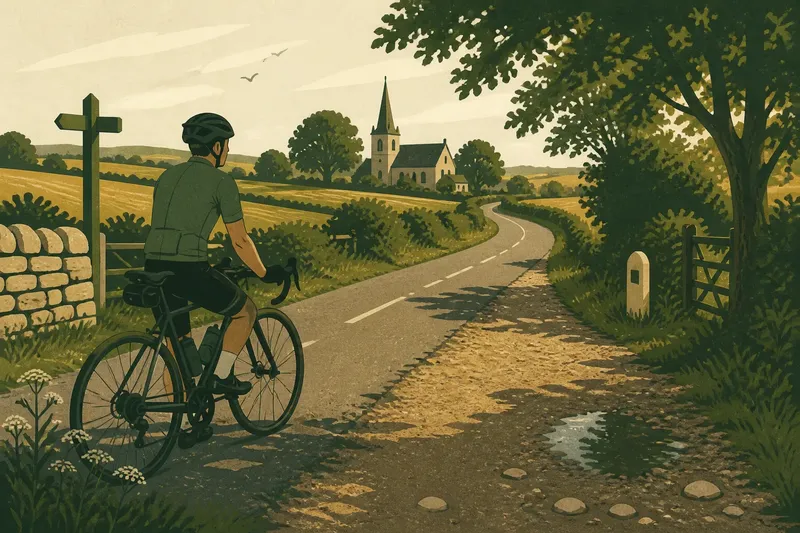
- Changing surfaces: Notice where smooth pavement becomes patched asphalt, gravel, or a rougher edge. Keep your eyes up and let the surface observation inform a cautious line rather than distract you.
- Landmarks: Look for recurring features such as a village sign, a church tower, a distinctive bridge, or a line of old trees.
- Water and drainage: Observe where a stream crosses the route, where a ditch follows the field, or where water tends to collect after rain. Do not ride into pooled water if you cannot judge its depth or the road beneath it.
- Sounds: Notice the change from birdsong to a distant train, wind in hedges, or the hush beneath a canopy of trees. Keep enough attention for traffic and other road users.
- Light and shade: Watch how the lane moves between open fields and tree cover, or how a familiar building looks from a different approach.
Choose just one theme before you leave. Several goals can make a restful ride feel like an assignment, especially if you start stopping to record every detail. If a second thing catches your eye, enjoy it; the single purpose is a nudge, not a rule.
How should the route fit?
Build a modest loop or out-and-back around the place where your chosen feature is easiest to notice. For a surface-focused ride, select a lane with a clear change in pavement and a safe place to pause afterward. For landmarks, link familiar points with a road you have not taken recently. A route planner can help you check the junctions, but its suggested line may favor speed or distance over quiet roads, so review the map yourself.
Say you want to notice how a lane’s surface changes. Imagine starting from a library in a small town, taking a familiar paved road toward a village, then turning back at a public green where the pavement gives way to a rougher country lane. The purpose is to notice the change from a safe riding position and decide whether that rougher stretch feels comfortable; if it does not, the outing can end at the green without needing to continue. The observable result is a clearer sense of which parts of the local route suit a relaxed ride.
Check the likely road conditions and weather before choosing the route. After rain, a shaded lane may hold leaves or standing water; in strong wind, an exposed return leg can feel less relaxed than the outbound ride. If you are unfamiliar with the area, identify a straightforward way back and keep your phone charged, while avoiding a plan that depends on looking at the screen while moving.
What should you bring?
Carry what makes the outing comfortable and lets you respond to ordinary hiccups: water, a layer suited to the weather, a charged phone, and any usual ride-repair items you know how to use. A small notebook or voice memo can help you remember a detail later, but neither is needed to make the ride count. If you stop to write or take a photo, move fully off the road and choose a place where you are visible and not blocking a path.
Keep the plan flexible. A closed road, a busy stretch, or a sudden change in weather can be a good reason to turn around or choose another lane. Check local signs and the relevant map, and follow the bicycle and road-use rules that apply where you ride. When route access or conditions are uncertain, use a clearly permitted alternative rather than assuming a track is open to bicycles.
How can you keep it relaxed?
Settle into a pace at which conversation would be easy, if you are riding with someone. Leave space between riders and agree on how to signal a stop or turn. A companion can notice different things, but the ride need not become a contest to spot more landmarks.
When a detail interests you, wait until there is a safe place to stop before taking a closer look. A patchwork of road repairs is easier to appreciate from the verge than while your attention is divided. If there is nowhere safe to pull over, keep riding and let the observation remain brief.
It can also help to choose an occasion rather than a target: a quiet morning before errands, a clear spell after lunch, or a slow ride home by a slightly different lane. The occasion gives the outing a natural boundary. You can head back when the time or energy feels right, rather than adding another loop to make the route seem substantial.
Which details are worth noticing?
Look for changes that reveal how a lane is used and shaped. A road may narrow between hedges, open beside fields, or pass from newer pavement to an older, uneven surface. A small bridge can mark a change in water or landscape. These observations make a route more memorable without requiring local-history research or a special destination.
You might also notice how your own choices change with the surroundings. Do you ease off near loose gravel? Does the shaded stretch feel cooler? Is there a junction where the road becomes harder to read? These are useful riding observations, but treat them as personal impressions rather than universal conclusions. Another day, weather or traffic may change the experience.
What do riders ask?
How long should a quiet lane ride be?
Choose an outing that fits your available time, comfort, and route options rather than aiming for a particular distance. A short loop can offer plenty to notice if it includes a change of surface, a landmark, or a peaceful place to pause.
Can I ride the same route more than once?
Yes. A familiar road often reveals different details under different light or weather, and knowing its junctions can leave more attention for the surroundings. Keep an eye on current conditions, since a previously quiet lane may be busier on another day.
What if I ride with someone who wants to go faster?
Agree on the purpose and a comfortable pace before setting off, and choose a route with easy meeting points if you prefer different speeds. If the pace stops feeling relaxed, shorten the ride or let the faster rider continue separately where that is safe and practical.
Do I need to record what I notice?
No. A remembered detail is enough, and stopping to document everything can pull attention away from riding. If you want a keepsake, make a brief note or take a photo only after you have left the road safely.
A useful return ritual
At home, name one detail you had not noticed before, even if it is simply where the hedge opened onto a field or where the pavement changed under your tires. That small recollection can help you choose another quiet lane ride with a fresh purpose. The search phrase quiet lane ride is most useful as a reminder of the idea: let the route serve your attention, and let a comfortable return be a complete outing.